Lite Coms Awarded $22 Million Contract to Support Critical SATCOM Requirements

Lite Coms has been awarded a $22 million contract to deliver advanced tactical satellite communications (SATCOM) capabilities supporting mission-critical communications for a U.S. government customer.

The award reflects continued confidence in Lite Coms’ ability to provide secure, resilient, and rapidly deployable communications solutions for defense and government operations. As mission requirements continue to evolve, reliable connectivity remains essential to maintaining operational readiness in challenging environments.

Lite Coms designs, manufactures, and integrates tactical communications systems that enable dependable communications across a wide range of operational scenarios. Its portfolio includes deployable SATCOM terminals, mobile communications systems, and integrated solutions built to support customers operating in demanding conditions around the world.

This contract further reinforces Lite Coms’ commitment to engineering innovation, manufacturing excellence, and delivering mission-ready communications solutions that help government and defense organizations stay connected when it matters most.

The award also highlights the company’s ongoing investment in expanding its capabilities while working closely with customers and industry partners to meet evolving operational needs.

To learn more about the contract award and what it means for Lite Coms and its customers, read the full press release below.

Read the full press release: https://www.prnewswire.com/news-releases/lite-coms-awarded-22-million-contract-to-support-critical-satcom-requirements-302806441.html

 Auto-Acquire Satellite Terminals for On-the-Move Operations

Key Takeaways

1. Essential for Remote Operations: Auto-acquire satellite terminals are crucial for maintaining reliable communication in remote military operations. They ensure uninterrupted command and control, enhancing mission success in challenging environments.
2. Field-Tested Solutions from Lite Coms: Lite Coms provides robust, compliant solutions that integrate seamlessly with existing military networks. Their satellite terminals are designed to function in extreme conditions, meeting stringent NSA, FIPS, and ITAR standards.
3. Addressing Procurement Challenges: Understanding military procurement challenges like budget constraints and lengthy cycles is key. Lite Coms offers streamlined processes, including pre-positioned RFP responses and phased evaluation programs, to accelerate decision-making and deployment.

By focusing on these key areas, military officers can ensure effective communication capabilities that are vital for remote and austere operations, aligning with both operational and regulatory requirements.

In the rapidly evolving landscape of 2026, maintaining effective communication is a cornerstone of successful military operations, especially when operating in remote and challenging terrains. As a military officer, you are well aware of the critical importance of reliable communication systems that can withstand the demands of austere environments. Auto-acquire satellite terminals have emerged as indispensable tools for ensuring seamless connectivity in such scenarios, enabling you to maintain command and control over your operations.

Lite Coms, a leader in military satellite communication solutions, is at the forefront of providing cutting-edge technology designed to meet the rigorous demands of military communication, logistics, and acquisition roles. Our solutions are not just technologically advanced but are also field-tested to ensure compliance with stringent military standards and seamless integration with existing networks. In this article, we’ll explore how Lite Coms’ offerings can address the unique challenges you face in ensuring reliable communication, comply with necessary regulations, streamline procurement processes, and support long-term operational needs.

1. The Importance of Reliable Communication in Remote Operations

In 2026, as a military officer, ensuring reliable communication in remote operations is critical for maintaining command and control. The challenges faced in austere environments—where traditional infrastructure is often nonexistent or compromised—demand robust solutions. These environments require systems that can withstand extreme weather and terrain, ensuring mission-critical communication remains uninterrupted.

Lite Coms addresses these challenges with its advanced satellite terminals, designed specifically for the rigors of military applications. These terminals are engineered to provide consistent connectivity even in the harshest conditions, supporting your mission needs effectively. By incorporating Lite Coms’ solutions, you can enhance operational capabilities, ensuring seamless communication for forward-deployed personnel, ultimately contributing to mission success.

2. Compliance and Interoperability: Meeting Military Standards

Adhering to established military standards is paramount for ensuring the efficacy and security of satellite communication systems. In 2026, compliance with NSA, FIPS, and ITAR standards is non-negotiable for all military communications equipment. These regulations safeguard sensitive information and ensure that communication systems meet stringent security and operational requirements.

Seamless integration with existing Command and Control (C2) networks and allied equipment is crucial. Systems must not only comply with technical specifications but also be compatible with legacy systems and allied networks, ensuring operational readiness and collaborative defense efforts.

Lite Coms stands out by consistently demonstrating its compliance credentials and proven interoperability. With NSA certifications, FIPS compliance, and adherence to ITAR regulations, Lite Coms’ solutions are engineered to integrate smoothly into current military frameworks, providing reliable and secure communication channels essential for mission success.

3. Overcoming Procurement Challenges

Navigating the complexities of military procurement in 2026 requires a strategic approach to tackle budget constraints and lengthy acquisition cycles. As military officers responsible for satellite communication systems, you’re well aware of the impact that fiscal limitations and extended procurement timelines can have on decision-making. These factors necessitate a careful balance between mission-critical needs and financial prudence.

To streamline the procurement process, consider adopting phased evaluation and pilot programs. These strategies allow for gradual integration, minimizing risks and facilitating smoother transitions. Lite Coms is committed to supporting this approach by providing comprehensive documentation and pre-positioned RFP responses. Our goal is to simplify the acquisition journey, ensuring that you have the tools and support needed to make informed decisions efficiently.

4. Ensuring Long-Term Support and Reliability

In the current military landscape, the sustainability of satellite communication systems is paramount for mission success. Lifecycle management over a 10-15 year deployment presents unique challenges. It’s crucial to address concerns about long-term maintenance, support, and spare parts availability. Lite Coms recognizes these challenges and offers robust lifecycle support solutions that ensure operational continuity.

Vendor stability is another critical factor. Military officers need assurance that their technology partners will remain reliable over extended periods. Lite Coms is committed to fostering long-term partnerships, underpinned by comprehensive training programs and a strong spare parts strategy. This dedication alleviates fears about vendor continuity, ensuring that your operations are never compromised by supply chain disruptions.

By choosing Lite Coms, you’re investing in a partner that prioritizes your strategic needs, providing not only advanced technology but also the enduring support needed for sustained mission effectiveness.

5. Case Studies: Proven Performance in the Field

Lite Coms continues to demonstrate the versatility of its SATCOM solutions across a variety of operational environments. During a Marine Reserve training exercise near Fort Greely, Alaska, the LITE SAT 1.3A was utilized in a Highly Elliptical Orbit (HEO) configuration to support communications in a challenging high-latitude environment where traditional GEO coverage can be limited.

More recently, the Lite Coms Hurricane supported a demonstration of the Riverine Assault Support System (RASS) at Camp Lejeune. Operating on the water, the Hurricane provided reliable, high-throughput backhaul in an environment where mobility, size, weight, and rugged performance are critical.

These demonstrations highlight the adaptability of Lite Coms solutions across diverse mission sets and reinforce their ability to support reliable communications in demanding operational environments.

Conclusion

In 2026, the dynamic landscape of military operations demands robust and reliable satellite communication systems, particularly for remote and austere environments. Lite Coms’ auto-acquire satellite terminals present a compelling solution, combining field-tested reliability with full compliance to military standards. For military officers managing communications, logistics, and acquisition roles, these systems are indispensable for maintaining seamless command and control. By partnering with Lite Coms, you can ensure your operations are equipped with cutting-edge technology that meets stringent interoperability and security requirements. Explore Lite Coms’ offerings to enhance your operational readiness and achieve mission success in the most challenging environments.

FAQ

1. What makes Lite Coms’ satellite terminals suitable for military use?
Lite Coms’ terminals are designed to meet stringent military standards, ensuring compliance with NSA, FIPS, and ITAR requirements, and offer seamless integration with existing networks.

2. How does Lite Coms address long-term support concerns?
Lite Coms provides comprehensive lifecycle support, including spare parts availability, training programs, and vendor stability assurances to ensure long-term operational reliability.

3. Can Lite Coms’ solutions handle extreme environmental conditions?
Yes, Lite Coms’ satellite terminals are engineered for robust performance in austere environments, ensuring reliable communication in challenging terrains and weather conditions.

4. Are there any real-world examples of Lite Coms’ terminals in action?
Lite Coms has numerous case studies showcasing the successful deployment of their terminals in various military operations, demonstrating their effectiveness and reliability in the field.

Lite Coms USG Sales Director George Cerasani Talks Network Resiliency at Modern Day Marine


In this conversation at Modern Day Marine, Lite Coms U.S. Government Sales Director George Cerasani discusses how Lite Coms designs its products to provide tactical, multi-orbit connectivity in order to give U.S. government customers like the Marines the ability to operate across multiple satcom networks.

Via Satellite Executive Editor Jeffrey Hill interviews Cerasani about some of the company’s products, including its CART terminal architecture.

“You need to have resiliency in your network,” Cerasani says. “We need some LEO, some GEO, some LTE. We need a little bit of everything in case you’re going against a near-peer threat and things happen on certain networks and you have to switch over.”

Hill: Hello everybody. This is Jeffrey Hill from Via Satellite Magazine and I’m here at Modern Day Marine in Lite Com’s booth with George Cerasani from Lite Coms.

George, good to see you.

Cerasani: Good to see you.

Hill: Welcome. How’s the show been going for you so far?

Cerasani: It’s been great this year. It’s been very busy. A lot of foot traffic, a lot of people stopping by asking about our equipment.

Hill: Yeah. Lots of excitement here. I can already tell. I can see even on the last day there’s a lot of people taking a look at all the products here.

But we are here in front of your multi-orbit 1.3A terminal. And we also have some of your CART minis, your infrastructure – we’re going to talk about in a bit.

I wanted to ask you uh with Lite Com’s 1.3 terminal, what kind of operational advantages do you—does the terminal provide? This is a multi-orbit terminal, so what advantages would that provide to war fighter in operations?

Cerasani: Yeah, so the Lite Sat 1.3 is is very unique. It’s multi-orbit. It does MEO, GEO and HEO, so the highly elliptical orbit. It’s certified on multiple different constellations, and the pack out is extremely small. Three cases, it can be airline checkable, which makes it awesome for a logistic standpoint. So that’s our huge advantage of it right now.

Hill: Yeah. I heard people earlier talking to you, asking if it was compatible with different constellations, and you said like it was it was compatible with a lot of different.

Cerasani: Yep.

Hill: Yeah. Yeah. There’s been a lot of talk here about the sort of, you know, Marines on the move on, comm’s on the move, which is no surprise for a military show. But can you tell us from your perspective how you expect those requirements for true comms on the move for the Marines to evolve over the next few years?

Cerasani: Yeah, so from my perspective, you know, the NATAM program specifically, the network on the move, has had a small parabolic antenna inside their vehicle. And I think a lot of things are switching to a flat panel system. So electronically steer to raid, and they’re looking for multi-orbit and then frequency, you know, the spectrum. They want to operate on different bands, and that’s really what we offer. We have a KU and a KA terminal that are certified on different networks. Multiple LEO platforms, which is awesome, because no one else really does that. And I think that’s where it’s all going to, right? Because we need to stay connected, you know, as you maneuver the battle space.

Hill: And do you still have people— I’m just curious if you still have people asking like why multi-orbit or why single orbit? Like, do you still have people and how do you answer that question?

Cerasani: You know, I think it used to be a common question, but now it’s just kind of a standard practice, right? That’s great to hear.

Hill: That’s great to hear.

Cerasani: Yeah, Like you need to have resiliency in your network, right? So, we need some LEO, some GEO, some LTE. We need a little bit of everything just in case you’re going against a near-peer threat, and you know things happen on certain networks, and you have to switch over. And that’s what kind of makes us unique, right? Like you can generate a pace plan inside of our terminal, so your primary alternate, you know, networks and it’ll switch between them as you know something becomes compromised or it’s no longer connected, and it’ll just switch automatically. Awesome for the war fighter.

Hill: That’s great to hear. You’ve got this really cool Polaris vehicle on display, and on top of that, we have a CART mini. Can you talk about your new CART infrastructure and how that works with your network?

Cerasani: Yeah. So the CART mini KU we’re, you know, we can do multiple LEO networks, right? So, we can do one web or SpaceX network. Then GEO, it’ll do GEO and LTE, and it has an option for a modem hookup on the back, right? So, you can hook up an external third modem, which is awesome. Then we have our KA cart, which is our newest product. So that’ll be GEO and LEO and MEO as well for the Empower network, which makes it awesome. An automatic filler between the three. So, makes it really unique.

Hill: Yeah, that’s great. That’s great. And you know what are some of the next big steps here for Lite Coms in the next year? Are you just —what do your customers have to look forward to?

Cerasani: Yeah, so they’re looking forward to our CART combined or KUK cart combined, and really that’s what we’re focused on, right? So, give them the advantage of KUKA in one single platform is our next step.

Hill: That’s awesome. Well, George, thank you so much for explaining all this to me. It looks really cool. The booth looks great and we’re glad that you’re having a great show here.

This conversation was sponsored by Lite Coms 

Fast Auto-Acquisition VSAT Systems for Combat Use

Key Takeaways

  • Fast Deployment: Fast auto-acquisition VSAT systems like the LITE SAT 1.3 reduce setup times to under 10 minutes, enhancing mission readiness for Specialist Riley in high-stakes environments.
  • Enhanced Mobility: Lightweight designs, such as the Lite Coms LITE SAT 1.3A weighing under 100 pounds, improve mobility and ease of deployment, crucial for operations in challenging terrains.
  • Reliable Performance: Lite Coms systems ensure continuous communication during critical operations, performing reliably in extreme conditions, from harsh weather to contested electromagnetic environments.

Introduction

In 2026, specialists face immense challenges in maintaining reliable communication in high-stakes military operations. Fast auto-acquisition VSAT systems are transforming this landscape by enabling swift deployment and robust performance in demanding environments. Lite Coms leads this technological advancement, offering cutting-edge solutions that address the unique challenges faced by military communications operators. Whether it’s in the unforgiving terrains of forward operating bases or on-the-move command units, Lite Coms ensures that warfighters can maintain mission-critical connectivity without delay.

1. The Need for Speed: Quick Deployment in Combat Zones

In combat zones where every second counts, the ability to establish reliable communication swiftly is paramount. Lite Coms’ VSAT systems, like the LITE SAT 1.3, feature auto-acquisition capabilities that shorten setup times to under 10 minutes. This rapid deployment ensures that you, Specialist Riley, can maintain operational readiness, supporting real-time mission operations without delay. Additionally, the intuitive interfaces of these systems reduce cognitive load, allowing you to concentrate on mission-critical tasks rather than wrestling with complex equipment.

2. Portability and Mobility: Lightweight Solutions for the Field

In your role as a communications specialist, mobility is crucial. The Lite Coms LITE SAT 1.3 designed with portability in mind, weighs under 100 pounds, enabling you to navigate diverse environments effortlessly. This lightweight system enhances your ability to move swiftly through challenging terrains without being encumbered by heavy equipment. Additionally, the LITE SAT 1.3 integrates seamlessly with existing communication infrastructures, reducing the need for multiple components and simplifying operations. These features ensure that you maintain operational readiness and mission success, regardless of location.

3. Reliability in Extreme Conditions: Performance You Can Trust

In the demanding environments you navigate, reliability is non-negotiable. Lite Coms’ systems are engineered to withstand the harshest conditions, ensuring mission-critical communication remains unbroken. Designed with durable construction, these systems perform consistently from scorching heat to freezing cold. Even in contested electromagnetic environments, you can rely on their robust performance to maintain continuous connectivity. Lite Coms’ field-proven technology has been rigorously tested, ensuring it meets and exceeds the operational demands of military missions. With Lite Coms, trust that your communications will endure, no matter the challenge.

4. User-Centric Design: Simplifying the Operator’s Experience

For communications operators, user-centric design is vital. Lite Coms’ systems feature intuitive interfaces, minimizing training time and reducing errors during high-pressure missions. The low-maintenance design lets you focus on mission-critical tasks, not equipment upkeep. Feedback from operators like you is integral, driving continuous improvements that enhance usability and reliability in the field.

Conclusion

Fast auto-acquisition VSAT systems from Lite Coms are transforming military communications by providing rapid deployment, portability, and reliable performance in the most demanding environments. These systems are not just tools but essential allies in ensuring mission success. Explore Lite Coms’ offerings to enhance your operational capabilities today.

FAQ

Q: What makes Lite Coms’ VSAT systems stand out for military use?
A: Lite Coms’ systems offer rapid auto-acquisition, lightweight design, and reliable performance in extreme conditions, making them ideal for military operations.

Q: How quickly can Lite Coms’ VSAT systems be deployed?
A: Systems like the Lite Sat 1000 can be deployed in under 10 minutes, significantly reducing setup times.

Q: Are these systems easy to use for operators with minimal training?
A: Yes, the intuitive interfaces and user-friendly design minimize the training required, allowing operators to focus on mission tasks.

Q: Can Lite Coms’ systems withstand harsh environmental conditions?
A: Absolutely. These systems are built to operate reliably in extreme weather and contested electromagnetic environments.

Q: How does Lite Coms incorporate user feedback into their products?
A: Lite Coms actively gathers feedback from field operators and uses it to refine and improve their systems, ensuring they meet the evolving needs of military users.

Multi-Orbit SATCOM: Designing Terminals for Integration, Usability, and Real-World Performance

Key Takeaways

In 2026, military officers evaluating satellite communication systems are increasingly focused on multi-orbit capability and real-world performance.

First, multi-orbit SATCOM—leveraging GEO, MEO, and LEO constellations—offers significant advantages in flexibility, resilience, and throughput, but also introduces new challenges in system design and operation.

Second, integration across terminals, modems, and network infrastructure is now critical to ensuring reliable performance and minimizing operational complexity.

Finally, operator usability and rapid deployment capabilities—such as Lite Coms’ Fast Auto-Acquire technology—play a key role in enabling mission success in remote and austere environments.

Introduction

In 2026, the landscape of military satellite communications continues to evolve as demand grows for faster, more resilient, and more flexible connectivity. For military officers responsible for communications, logistics, and acquisitions, ensuring uninterrupted command and control for forward-deployed personnel remains a top priority.

One of the most significant shifts driving this evolution is the adoption of multi-orbit SATCOM architectures. By leveraging multiple satellite constellations across GEO, MEO, and LEO, modern systems can deliver improved performance and redundancy. However, this increased capability also introduces new challenges around system integration, usability, and deployment.

This article explores how SATCOM terminals are evolving to support multi-orbit operations, with a focus on integration, operator experience, and real-world performance considerations.


1. Understanding Multi-Orbit & Constellation Services

Multi-orbit and constellation services are transforming military communications by enabling systems to operate across multiple satellite networks rather than relying on a single orbit.

Definition and Importance

Multi-orbit SATCOM systems leverage GEO, MEO, and LEO constellations to balance coverage, latency, and throughput. GEO satellites provide stable, wide-area coverage, while LEO constellations deliver lower latency and higher data speeds. Together, they create a more flexible and resilient communications architecture.

How It Changes SATCOM

Instead of a fixed, single-network approach, modern SATCOM systems must dynamically manage connectivity across multiple constellations. This allows operators to optimize performance based on mission needs and environmental conditions.

Operational Impact

Multi-orbit capability improves redundancy and enables continued operations in contested or degraded environments. However, it also increases complexity, requiring systems that can seamlessly manage network transitions and maintain reliable connectivity.


2. System Integration in Multi-Orbit Architectures

As SATCOM systems evolve, integration has become the defining factor in overall performance.

Modern terminals are no longer standalone hardware—they are part of a larger ecosystem that includes RF components, modem technologies, and network infrastructure. Effective multi-orbit operation depends on how well these elements work together.

Systems must integrate with modem technologies and network services from established providers such as Comtech, Viasat, and others. This coordination ensures that terminals can operate across multiple networks without requiring extensive manual configuration.

Poor integration can introduce operational risk, increasing setup time and making systems more difficult to use in the field. In contrast, well-integrated systems reduce complexity, improve reliability, and enable faster deployment.


3. Operator Experience and System Usability

While performance specifications are important, operator experience is often the determining factor in real-world success.

Multi-orbit systems introduce additional complexity, including multiple network options, configuration parameters, and operational workflows. Without thoughtful design, this complexity can slow deployment and increase the likelihood of errors.

Modern SATCOM systems must prioritize usability through centralized control interfaces and intuitive GUIs. By simplifying system management, operators can establish connectivity more quickly and maintain it more effectively in dynamic environments.

Solutions that reduce training requirements and streamline operation provide a significant advantage in mission-critical scenarios.


4. Multi-Orbit Performance in Real-World Conditions

Understanding the performance characteristics of different orbits is essential to evaluating multi-orbit SATCOM systems.

LEO constellations offer low latency and high throughput, making them well-suited for real-time applications. GEO satellites, on the other hand, provide stable coverage over large geographic areas. Multi-orbit systems combine these strengths to deliver more adaptable communication capabilities.

However, real-world performance depends on more than just access to multiple networks. Systems must manage handoffs between satellites, maintain link stability, and operate effectively in challenging environments.

Factors such as terrain, weather, and mobility all impact performance, making system design and field validation critical to ensuring reliable operation.


5. Design Tradeoffs in Multi-Orbit SATCOM Systems

Designing effective multi-orbit SATCOM systems requires balancing competing priorities.

Portability vs. Performance

Smaller, more portable systems enable rapid deployment but may limit throughput. Larger systems offer higher capacity but require more logistical support.

SWaP vs. Capability

Reducing size, weight, and power improves mobility, but can constrain system performance and integration options.

Mobility vs. Stability

Systems designed for communications-on-the-move must balance speed and flexibility with consistent connectivity.

Simplicity vs. Flexibility

Highly configurable systems provide more options but can increase operator burden without well-designed interfaces.

Understanding these tradeoffs is essential for selecting systems that align with mission requirements.


6. Addressing Operational Challenges

Military operators face a range of challenges when deploying SATCOM systems in demanding environments.

Interoperability remains a critical requirement. Systems must integrate with existing military networks, legacy infrastructure, and allied equipment while meeting strict technical specifications.

Rapid deployment is equally important. Operators need systems that can be set up quickly with minimal training, particularly in high-stakes scenarios where time is critical.

Reliability in austere environments is another key factor. Systems must perform consistently in extreme conditions without relying on existing infrastructure, ensuring continuous communication in remote locations.


7. Strategic Procurement Considerations

Procurement decisions for SATCOM systems extend beyond performance specifications.

Lifecycle support is a major consideration, as systems are expected to operate over long deployment periods. This requires reliable access to spare parts, training, and ongoing technical support.

Compliance and certification are also essential. Systems must meet NSA, DoD, and interoperability standards to ensure secure and effective operation.

Finally, reducing integration risk is becoming a top priority. Systems that simplify integration into existing architectures are more likely to be successfully deployed and sustained over time.


Conclusion

Multi-orbit SATCOM is reshaping how communication systems are designed and deployed across military operations. While it offers significant advantages in performance and flexibility, it also introduces new challenges that must be addressed through thoughtful system design.

Success in modern SATCOM environments depends on integration, usability, and real-world performance—not just individual component capabilities. Systems that simplify operation, reduce complexity, and support seamless multi-orbit connectivity will be best positioned to meet the demands of today’s missions.

Lite Coms continues to focus on these principles, developing solutions that enable rapid deployment, reliable performance, and effective integration across modern SATCOM architectures.

FAQ

Q: What is multi-orbit SATCOM?
A: Multi-orbit SATCOM refers to systems that operate across multiple satellite constellations—such as GEO, MEO, and LEO—to optimize performance, resilience, and flexibility.


Q: Why is multi-orbit important for military communications?
A: It improves redundancy, reduces latency, and enables more reliable connectivity in dynamic and contested environments.


Q: What are the biggest challenges with multi-orbit systems?
A: Integration, network switching, and operational complexity are the primary challenges that must be addressed through system design.


Q: How do SATCOM systems integrate with modems and networks?
A: Through coordinated system architecture that ensures seamless communication between terminal hardware, modem technologies, and network infrastructure.


Q: What should buyers prioritize when evaluating SATCOM systems?
A: Key considerations include integration, usability, interoperability, performance, and long-term support—not just raw technical specifications.
The End of the VSAT Parts Bin: Why Tactical SATCOM Is Moving Toward Integrated Systems

As tactical satellite communications continue to evolve, the conversation is shifting beyond antenna performance alone. Today’s military and government users increasingly require complete, integrated communications architectures that simplify deployment, reduce complexity, and improve operational readiness.

In a featured article published by SatNews, Lite Coms explores how modern tactical VSAT systems are moving away from traditional “parts bin” deployments—where antennas, modems, and control software are sourced separately—and toward unified platforms designed to operate as a single system.

Lite Coms parabolic VSAT terminal (left) and electronically steerable flat-panel terminal (right).
Feature Parabolic VSAT ESA VSAT
Signal acquisition Motorized auto-acquire Electronic beam steering
Deployment time Minutes Near-instant
Mobility Quick halt (COTP) Full COTM capable
Constellation support GEO, MEO, HEO LEO, GEO, MEO
Throughput High Moderate to high
Best suited for Expeditionary backhaul, fixed-site C2 Tactical vehicles, mobile command, rapid deployment

The article examines several key trends shaping the future of tactical SATCOM, including:

  • Why integrated system architectures are replacing standalone hardware approaches.
  • The mission-dependent roles of parabolic and electronically steerable (ESA) terminals.
  • How Tactical Modem Assemblies (TMAs) reduce deployment time, cabling, and potential points of failure.
  • The benefits of unified operator interfaces that simplify training, configuration, and system management.
  • Why future defense procurements are increasingly evaluating complete communications architectures rather than individual components.

As defense missions become more dynamic, operators need communications solutions that are faster to deploy, easier to manage, and built to perform reliably in demanding environments. Integration is becoming a key differentiator in meeting those requirements.

Read the full SatNews article to explore how integrated tactical SATCOM architectures are shaping the future of deployable communications.

Lite Coms Leaders Discuss the Future of Multi-Orbit Tactical VSAT

As military communications continue to evolve, multi-orbit connectivity is becoming a critical capability for defense and government organizations. In an exclusive interview with Via Satellite, Lite Coms U.S. Army Sales Manager Gabrielle D’Amico and Vice President of Operations and Programs Andrew Colaruotolo discuss the company’s approach to developing next-generation tactical SATCOM solutions.

The interview explores Lite Coms’ vision for multi-orbit, multi-band communications and how the company is preparing customers for the future of military connectivity. Topics include advancements in tactical VSAT technology, support for emerging U.S. Army requirements, investments in American manufacturing, and ongoing innovation across Lite Coms’ product portfolio.

Readers will also learn more about Lite Coms’ commitment to designing rapidly deployable communications systems that support mission success while simplifying operations for users in the field. The conversation highlights the company’s continued focus on engineering innovation, operational readiness, and delivering flexible communications solutions that can adapt to evolving mission requirements.

Whether you’re interested in multi-orbit SATCOM, tactical communications, or the future of military networking, this interview provides valuable insight into where the industry is headed and how Lite Coms is helping shape that future.

Read the full interview on Via Satellite to hear directly from Gabrielle D’Amico and Andrew Colaruotolo about the technologies and strategies driving the next generation of tactical VSAT.

Inside Lite Coms at SATELLITE 2026: Full Booth Walkthrough

SATELLITE 2026 was a great opportunity to connect with partners, customers, and the broader SATCOM community.

At the Lite Coms booth, we showcased a range of mission-ready communication solutions designed for defense, government, and tactical environments.

In the video below, Andrew (VP of Operations & Programs) walks through the systems we brought to the show and how they support real-world operations.

Click here to watch

What We Showcased at SATELLITE 2026:

  • Rapid deployment SATCOM systems
  • Multi-orbit connectivity (LEO + GEO)
  • Rugged, mission-ready designs
  • High-throughput communications in contested environments

Want to learn more about Lite Coms solutions?
Visit www.litecoms.com/products.

Lite Coms Hurricane Rugged Testing: Built for Real-World Conditions

In mission-critical environments, communications equipment isn’t just expected to perform—it’s expected to endure. From harsh terrain to unpredictable weather and constant movement, failure is not an option.

That’s why the Hurricane was engineered with durability at its core.

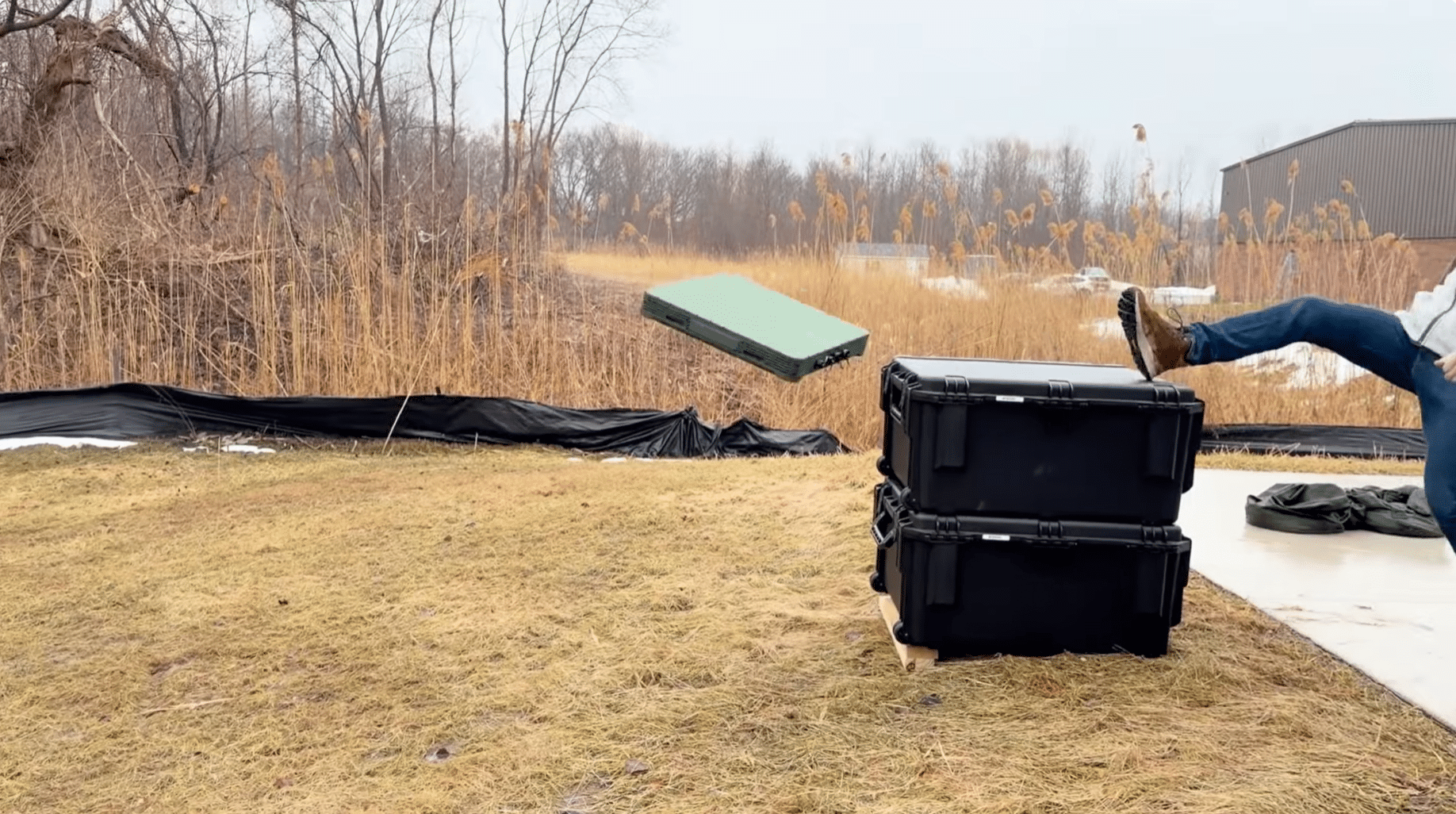
In this video, we put the Hurricane through a series of rugged tests to demonstrate how it performs under stress.

Engineered for the Demands of the Field

The Hurricane is designed for operations where conditions are unpredictable and environments are unforgiving. Whether deployed on vehicles, used in remote locations, or exposed to the elements, it must maintain reliable performance.

Testing the Limits: What We Put It Through

To validate its rugged design, the Hurricane underwent a range of tests that show it’s durability.

Impact Testing

We subjected the unit to controlled drops to evaluate its structural integrity under sudden impact. This helps ensure the system can withstand the kind of handling and movement common in field deployments.

Connector Durability Testing

Connections are often a point of failure in harsh environments. We tested the robustness of the Hurricane’s connectors under stress to confirm long-term reliability.

Water Exposure Testing

From rain to accidental submersion, exposure to water is unavoidable in many operational settings.

Why This Matters

For defense, government, and remote operations, communications systems must work every time—regardless of conditions.

Rugged testing like this ensures:

  • Reduced risk of equipment failure in the field

  • Greater operational confidence

  • Lower maintenance and downtime

  • Reliable connectivity when it matters most

Built for Mission-Critical Connectivity

The Hurricane isn’t just built to perform in ideal conditions—it’s built for the environments where other systems fail.

🔗 Learn More

Interested in learning more about the Hurricane and how it can support your operations?

👉 www.litecoms.com/hurricane

Reliable VSAT Systems for NGC2-Enabled Defense Missions

Key Takeaways

– The Next Generation Command and Control (NGC2) initiative is transforming battlefield decision-making through a unified, software-driven architecture.
– Lite Coms portable VSAT systems enable reliable, low-latency connectivity required to support NGC2 environments.
– Designed for rapid deployment, interoperability, and security compliance, these systems integrate seamlessly into modern C2 ecosystems.
– Proven in austere environments, Lite Coms solutions ensure continuous communications at the tactical edge.
– Comprehensive lifecycle support helps reduce total cost of ownership and simplifies long-term deployment.

Enabling NGC2 at the Tactical Edge with Lite Coms

Lite Coms’ portable VSAT systems—including the CART, CART Mini, Hurricane, and Lite Sat 1.3—are purpose-built to deliver resilient communications that align with NGC2 requirements.

These systems act as the connectivity backbone that allows distributed forces to:

– Access and share real-time data
– Maintain situational awareness
– Synchronize operations across domains

1. Reliable Connectivity in Contested and Remote Environments

Why it matters for NGC2: Data is only useful if it can move—reliably and continuously.

Lite Coms systems are engineered to perform in:

– Extreme weather conditions
– Rugged terrain
– Infrastructure-denied environments

Field-proven across forward operating bases and mobile missions, these systems ensure that NGC2-enabled platforms remain connected when it matters most..

2. Built for Interoperability with Modern C2 Architectures

Why it matters for NGC2: Open architecture demands flexible, standards-based connectivity.

Lite Coms systems are designed to integrate seamlessly with:

– Existing Command and Control (C2) frameworks
– Coalition and allied networks
– Hybrid communication stacks (SATCOM + LTE/5G)

With compliance aligned to DoD and NSA standards (including FIPS and ITAR), these systems support secure data transport across the NGC2 ecosystem..

3. Rapid Deployment for Time-Sensitive Operations

Why it matters for NGC2: Speed is a competitive advantage.

Lite Coms portable VSAT systems are designed for:

– Quick setup with minimal training
– Vehicle-mounted or man-portable configurations
– Fast network acquisition and link establishment

This enables units to establish communications quickly, supporting the real-time decision cycles central to NGC2.

4. Scalable Support for Distributed Operations

Why it matters for NGC2: Future operations are decentralized and data-driven.

Lite Coms solutions support:

– Distributed teams across multiple locations
– Scalable deployments from small units to large operations
– Long-term sustainment with lifecycle support and training

This ensures that connectivity infrastructure evolves alongside NGC2 capabilities.

Conclusion

NGC2 represents a fundamental shift in how the U.S. Army approaches command and control—prioritizing speed, integration, and data-driven decision-making.

However, these capabilities depend on one critical factor: reliable, resilient connectivity.

Lite Coms portable VSAT systems provide the infrastructure needed to support NGC2 environments—delivering secure, high-performance communications in the most demanding operational conditions.

For defense organizations looking to operationalize NGC2 concepts, Lite Coms offers proven, mission-ready solutions built for the modern battlefield.

FAQ

Q1: What is NGC2?
A1: NGC2 (Next Generation Command and Control) is a modernization initiative focused on improving battlefield decision-making through a unified, software-driven architecture that integrates data across systems.

Q2: Is NGC2 a product or a system?
A2: No. NGC2 is not a single product—it is a technology framework and architecture that relies on multiple integrated systems, including communications infrastructure.

Q3: Why is satellite communication important for NGC2?
A3: NGC2 requires real-time data sharing across dispersed units. Satellite communications provide reliable, beyond-line-of-sight connectivity, especially in remote or contested environments..

Q4: What types of missions benefit from portable VSAT systems?
A4: Portable VSAT systems are ideal for:

– Forward-deployed units
– Special operations
– Disaster response
– Mobile command posts