
In mission-critical environments, communications equipment isn’t just expected to perform—it’s expected to endure. From harsh terrain to unpredictable weather and constant movement, failure is not an option.
That’s why the Hurricane was engineered with durability at its core.
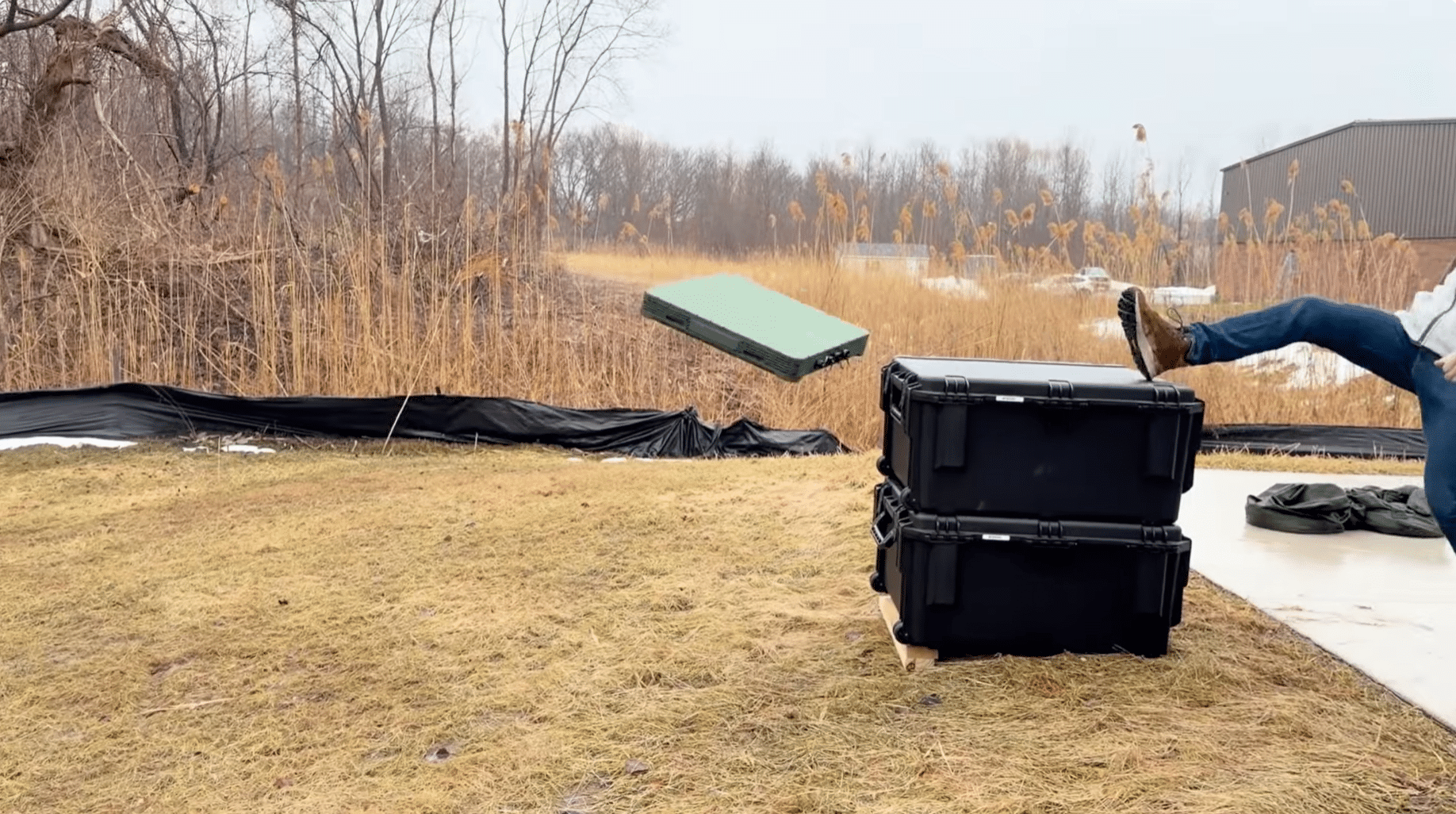
In this video, we put the Hurricane through a series of rugged tests to demonstrate how it performs under stress.
Engineered for the Demands of the Field
The Hurricane is designed for operations where conditions are unpredictable and environments are unforgiving. Whether deployed on vehicles, used in remote locations, or exposed to the elements, it must maintain reliable performance.
Testing the Limits: What We Put It Through
To validate its rugged design, the Hurricane underwent a range of tests that show it’s durability.
Impact Testing
We subjected the unit to controlled drops to evaluate its structural integrity under sudden impact. This helps ensure the system can withstand the kind of handling and movement common in field deployments.
Connector Durability Testing
Connections are often a point of failure in harsh environments. We tested the robustness of the Hurricane’s connectors under stress to confirm long-term reliability.
Water Exposure Testing
From rain to accidental submersion, exposure to water is unavoidable in many operational settings.
Why This Matters
For defense, government, and remote operations, communications systems must work every time—regardless of conditions.
Rugged testing like this ensures:
-
Reduced risk of equipment failure in the field
-
Greater operational confidence
-
Lower maintenance and downtime
-
Reliable connectivity when it matters most
Built for Mission-Critical Connectivity
The Hurricane isn’t just built to perform in ideal conditions—it’s built for the environments where other systems fail.
🔗 Learn More
Interested in learning more about the Hurricane and how it can support your operations?
👉 www.litecoms.com/hurricane