
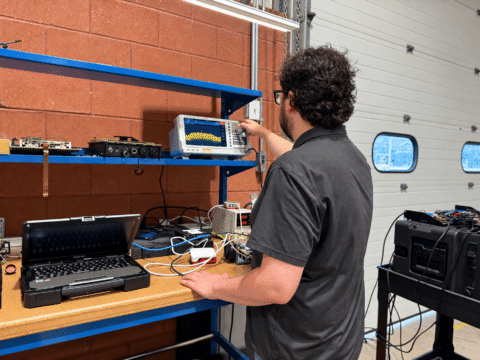
What does a day in engineering at Lite Coms actually look like?
For Kyle, an Electrical Engineer who also serves in a systems engineering role on several programs, there isn’t really a simple answer. His work can take him from design and analysis to troubleshooting hardware, reviewing test data and collaborating with teams across the company—all in the same day.
We spent a day with Kyle to get a closer look at what goes into engineering at Lite Coms and how seemingly small technical decisions can impact an entire system.
“One of the things I enjoy about systems engineering is that there really isn’t a single ‘typical’ day.” — Kyle
8:30 AM | Starting With the Big Picture
Kyle’s day often starts with understanding where a program stands and what needs his attention.
Much of his work supports larger, established programs with rigorous testing and certification requirements. As a systems engineer, his responsibility is to keep the bigger picture in mind and make sure the overall design continues to meet the requirements established for the system.
Depending on the day, that could mean reviewing a design, evaluating component options, troubleshooting hardware, analyzing test data or working through technical requirements and documentation.
That variety is one of the things Kyle enjoys most about systems engineering. Rather than focusing on just one piece of a project, he gets to work across different areas of engineering and see how they come together as a complete system.
10:00 AM | Balancing Design, Performance and the Real World
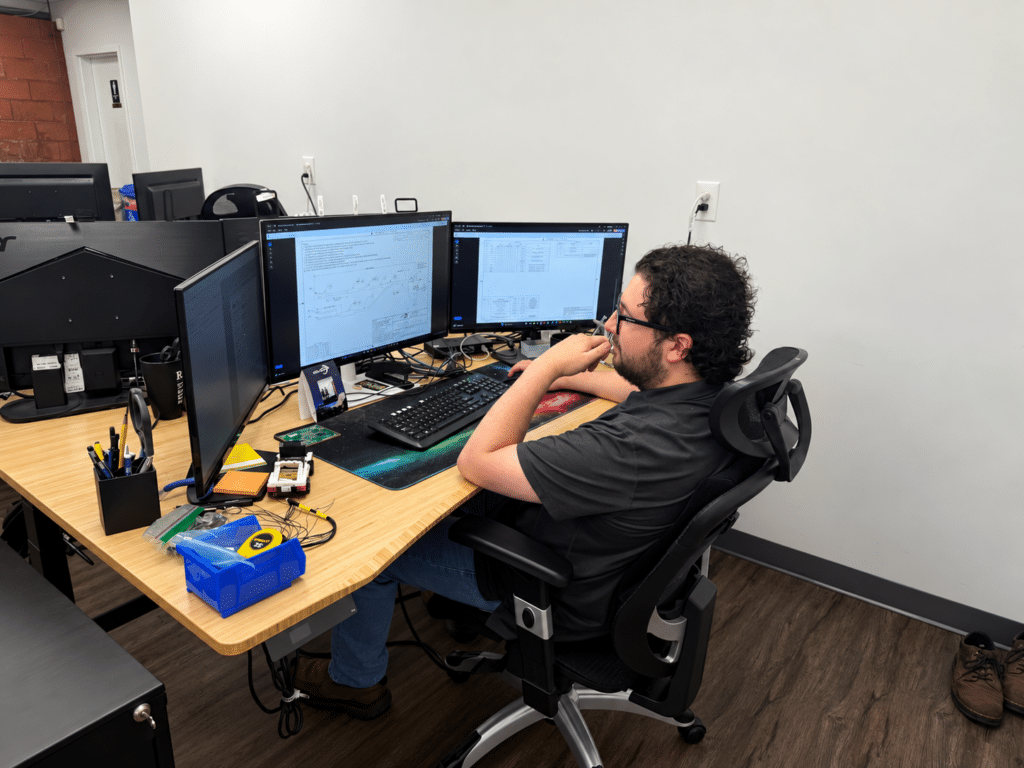
Kyle estimates that roughly 60% of his time is spent on design and analysis and 40% working hands-on with hardware and testing, although that balance can change significantly depending on the stage of a program.
During the design process, there is much more to consider than whether an individual component will work. Engineers have to evaluate how a potential solution will affect the system as a whole.
That means balancing factors like size, weight, power, performance, cost, availability, reliability and long-term support.
Finding the right solution that delivers the best overall SWaP-C—size, weight, power and cost—can require a significant amount of engineering work before a design ever makes it to hardware.
“I really enjoy having that combination of design work and hands-on testing because I get to see a design go from an idea on paper to an actual working system.” — Kyle
11:30 AM | Engineering Is a Team Effort
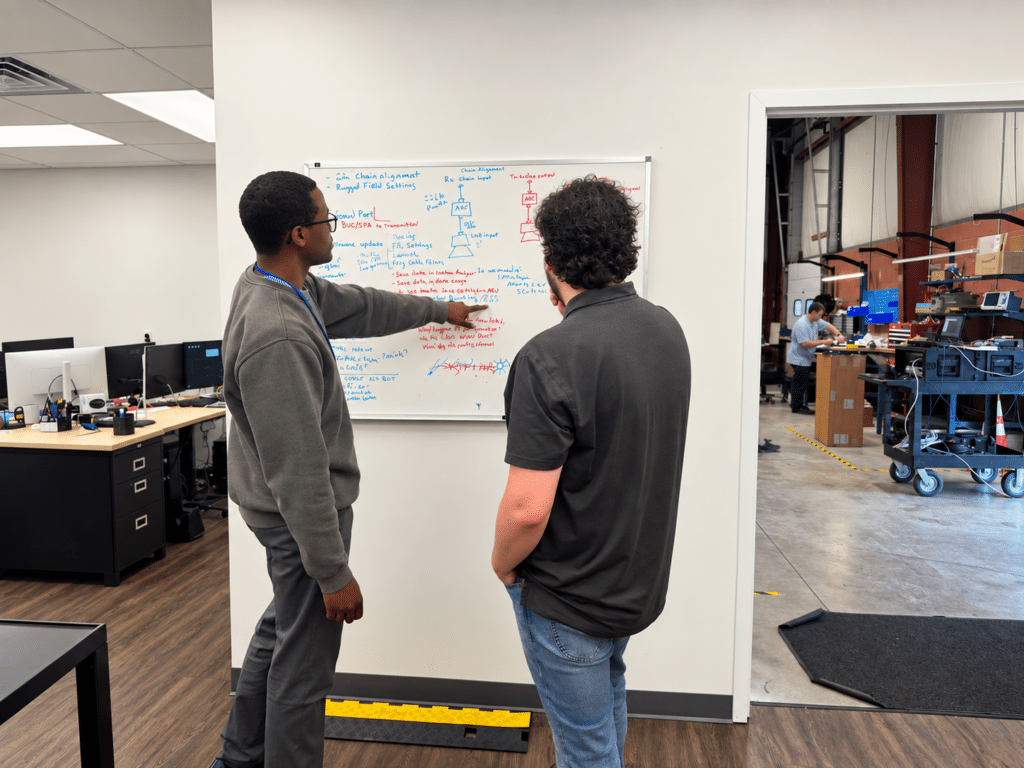
Systems engineering also means Kyle rarely works in isolation.
Throughout a program, he collaborates closely with software and mechanical engineering, program management, supply chain and other teams throughout Lite Coms.
Electrical and software engineers may work together to make sure hardware and software interface correctly, while mechanical engineering helps address packaging, mounting, thermal considerations and physical constraints. Program management brings schedules, priorities and customer expectations into the picture, while supply chain becomes especially important when component selection, availability or obsolescence comes into play.
Kyle’s role helps connect those individual considerations back to the needs of the overall system.
“A big part of my job is communicating across those different groups and making sure everyone understands how their piece affects the overall system.” — Kyle
1:00 PM | From the Screen to the Hardware
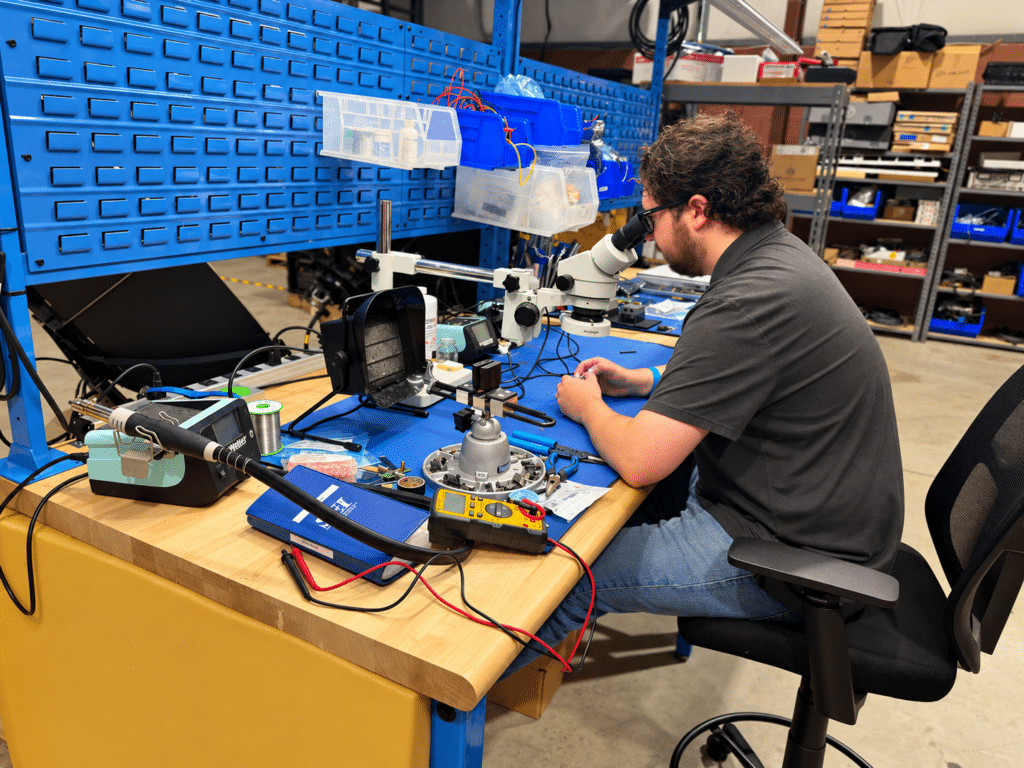
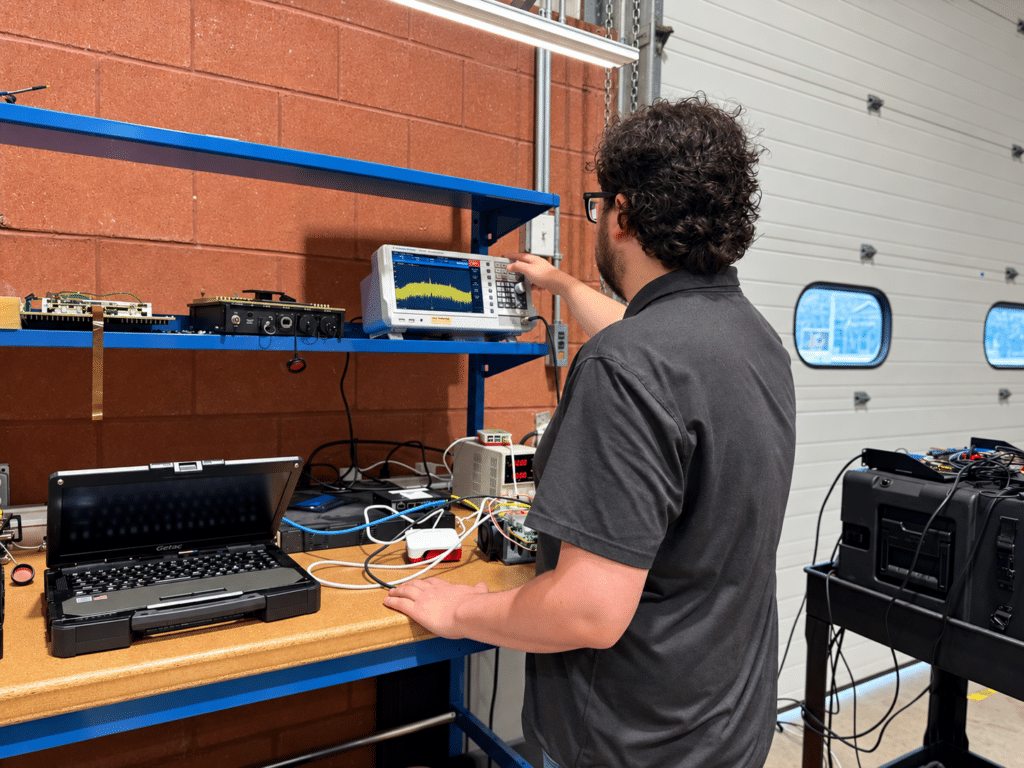
Once hardware is available, Kyle’s work can become much more hands-on.
Depending on the program, he may spend weeks performing validation testing or supporting certifications. That means working directly with hardware, troubleshooting issues, collecting data and analyzing the results.
The process doesn’t stop when the test is complete. The results need to be reviewed and documented to demonstrate that the system meets its requirements.
For Kyle, this is where the design work becomes tangible—and where engineers get to see whether the decisions made earlier in the process perform as expected in the real world.
2:30 PM | Solving Problems That Aren’t as Simple as They Look
Sometimes an engineering challenge begins with something that sounds surprisingly straightforward: replace a part.
Kyle recently encountered that situation when a component used in an established program was becoming obsolete.
In a qualified system, however, replacing a component isn’t as simple as finding another part that looks equivalent.
Kyle first had to understand the system requirements and determine which characteristics a replacement needed to maintain. From there, he worked with the appropriate engineering disciplines and suppliers to identify alternatives and evaluate them against the system’s electrical, mechanical, environmental and performance requirements.
Once a potential replacement was identified, testing and analysis were needed to validate the change and make sure it didn’t negatively affect the rest of the system. The results and engineering rationale then had to be documented to demonstrate that the updated design continued to meet the required specifications.
“The problem wasn’t necessarily designing something completely new. It was understanding how one change could affect the entire system.” — Kyle
It’s a good example of what systems engineering looks like in practice: a change to one component can have implications far beyond that individual part.
4:00 PM | Making Sure It All Works Together
By the end of the process, the individual pieces have to come back to one question: Does the complete system perform the way it is supposed to?
That big-picture perspective runs throughout Kyle’s work, whether he is supporting an established program or helping develop something new.
On newer programs, his focus shifts more toward system-level performance specifications. He works across engineering disciplines to determine how the system can meet those requirements while balancing performance, size, weight, power, cost, reliability and manufacturability.
It’s one of the reasons systems engineering plays such an important role. Individual components can perform exactly as intended, but ultimately, they have to work together as one complete system.
Kyle’s Advice for Future Engineers
After spending his career solving engineering problems, Kyle’s advice for engineering students and those just beginning their careers comes down to two things:
“Be curious and be tenacious.”
Don’t be afraid to ask questions, Kyle says, especially early in your career. New engineers aren’t expected to know everything, and understanding why something was designed a certain way can often be more valuable than simply learning what was done.
Tenacity matters just as much.
Engineering problems don’t always have an obvious answer, and the first solution won’t always work. Being willing to keep digging, learn from the people around you and try a different approach is an important part of becoming a better engineer.
Kyle also encourages students to seek out hands-on experience whenever possible.
Classes provide the technical foundation, but projects, labs, internships and opportunities to actually build and test something help bridge the gap between theory and real-world engineering.
And perhaps most importantly, you don’t need to have your entire career figured out on day one.
“Focus on building a strong technical foundation, learning from the people around you, and finding the types of problems you enjoy solving.” — Kyle
Engineering at Lite Coms
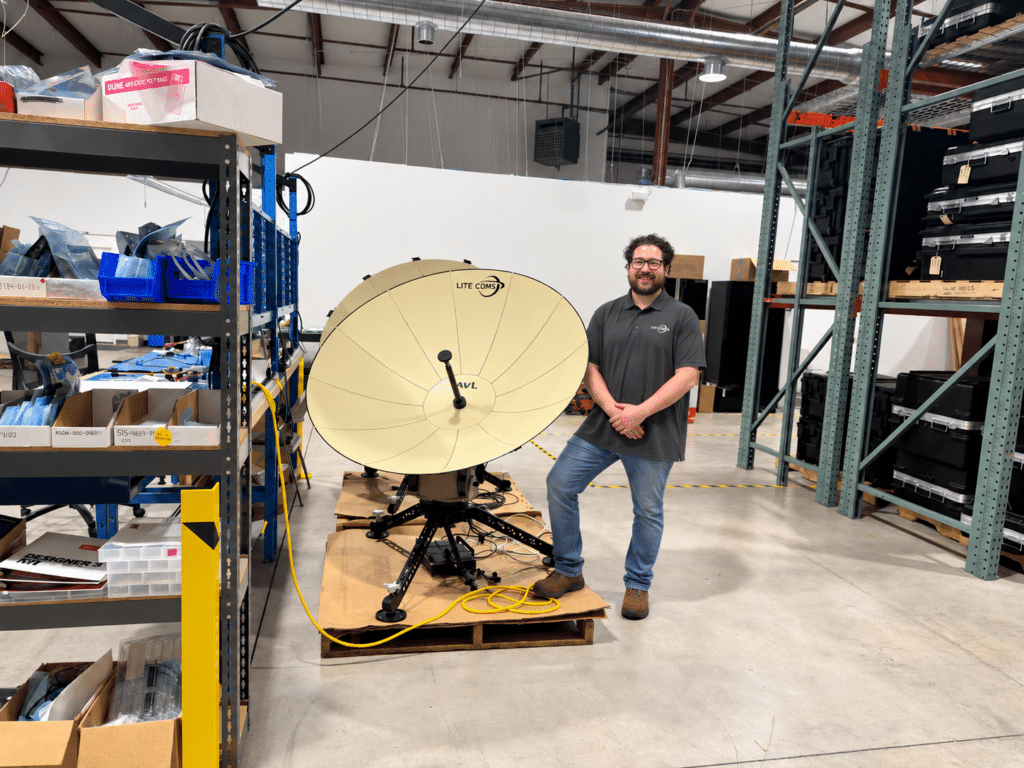
From design and analysis to hands-on testing and cross-functional problem solving, Kyle’s day demonstrates how much goes into making sure a complete system performs as intended.
And sometimes, the most interesting engineering challenges aren’t about designing something entirely new. They’re about understanding how one decision can affect everything around it—and finding the right solution.
Interested in solving real-world engineering challenges?
Explore career opportunities at Lite Coms and see where your engineering career could take you.